

230: Build - How to structure a “People Ops as a Product team”
Treating your People function like a product team. Roadmaps, sprints, and customer thinking applied to internal operations.
by
If you walk into a Product or Engineering department, you won’t see teams organized by their job titles. You won’t see a room full of coders sitting in silence, separated from the designers. You will see Squads: cross-functional teams rallying around a specific problem to build a solution.
So, why does HR still insist on sitting in silos?
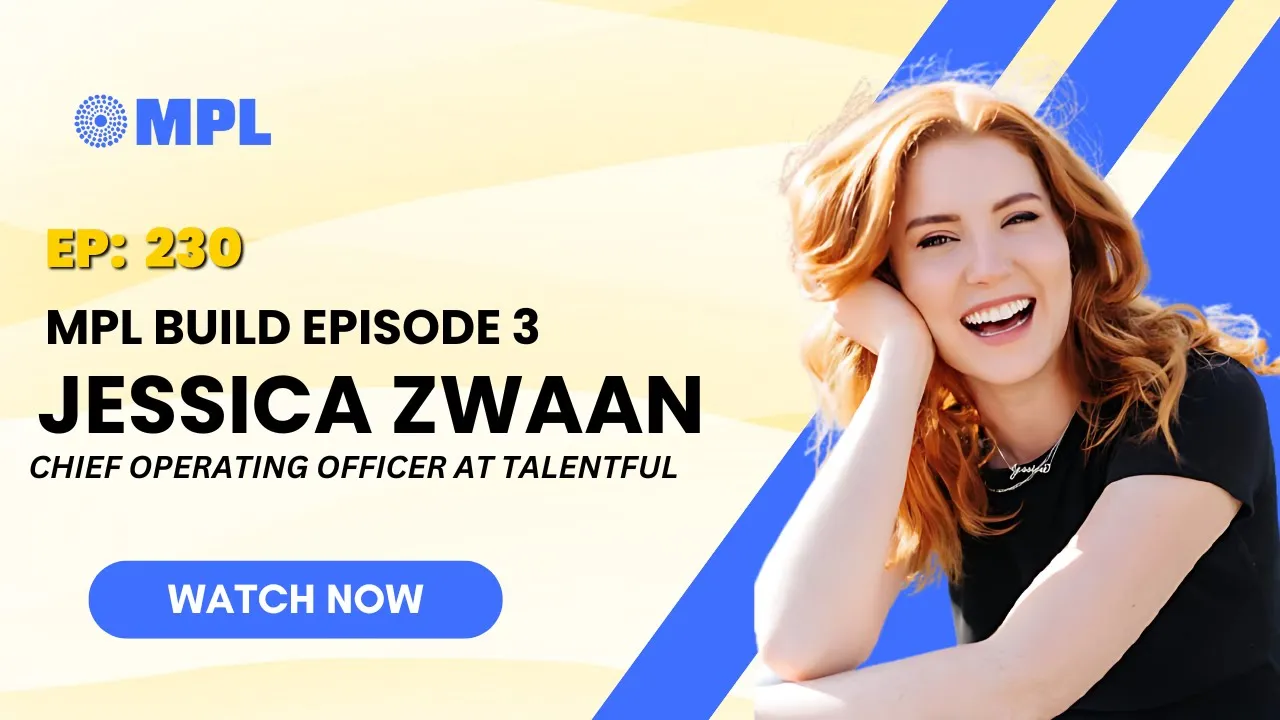
In a recent episode of The Modern People Leader (MPL Build Episode 3), hosts Daniel and Stephen sat down with Jessica Zwaan, COO at Talentful and author, to dismantle the traditional HR structure. The conversation centered on a radical but necessary shift: treating People Operations as a Product and restructuring HR teams into agile squads.
If you are looking to future-proof your People function, here is why you need to stop thinking in terms of "departments" and start thinking in terms of "deployments."
The traditional HR model is comfortable. Recruiters recruit. L&D professionals train. HRBPs handle relations. But business problems rarely fit neatly into these boxes.
As Zwaan points out in the episode, complex issues like high attrition are rarely solved by one function alone. If you just throw more recruiters at a high-turnover role, you create a hiring backlog without fixing the leak.
Enter the Squad Model.
Inspired by Spotify’s famous engineering culture, an HR Squad is a small, cross-functional team (usually around 6 people—the "two-pizza rule") assembled to solve a specific problem or manage a specific product area.
Instead of grouping people by title, you group them by complementary skills. A Squad focused on "Onboarding & Retention" might consist of:
A Recruiter (Subject Matter Expert)
A Data Analyst (To measure retention metrics)
A Learning Designer (To build the training materials)
A Comms Specialist (To handle internal messaging)
A Project Lead
They aren't there to "do HR." They are there to build a product that solves a business metric.
One of the biggest hurdles for HR professionals transitioning to this model is the fear of imperfection. HR has historically been a risk-averse function. We wait a year to launch a perfect performance review cycle because we are terrified of getting it wrong.
The Squad model demands a Product Mindset.
It requires moving from "Big Bang" launches to MVPs (Minimum Viable Products). It means releasing a new policy or program to a small test group (50 people, not 5,000), gathering user research, iterating, and then scaling.
As Zwaan notes, this can be jarring for organizations used to glossy, finished HR products. But in an era where the way we work changes monthly (thanks to AI and remote work), waiting 12 months to launch a program means launching something that is already obsolete.
Perhaps the most compelling argument for the Squad model is how it reshapes career progression.
In traditional HR, the only way to get a promotion is usually to manage people. But as Zwaan candidly admitted in the podcast, "I hate being a manager." And she’s not alone. Many high-performers love the work, but dislike the management.
The Squad model introduces a third lane for career growth: The Entrepreneurial Track.
You don't have to manage people to move up; you can manage projects. You can become a Squad Lead. This allows distinct subject matter experts—like a brilliant data analyst or a world-class recruiter—to lead high-impact initiatives without being forced into people management roles they aren't suited for.
This flexibility creates a more dynamic, engaged HR team where people play to their "spikes" (their unique strengths) rather than checking boxes on a generic competency matrix.
You don't need a 50-person HR team to start working this way. In fact, trying to overhaul your entire org chart overnight is a recipe for disaster.
The advice from the episode is clear: Start with a pilot.
Identify a burning problem: Is it attrition in Engineering? Is it a lack of diversity in leadership? Is it a broken onboarding NPS?
Find the "Positive Halo": Don't force resistors into the first squad. Find the innovators on your team—the people who are hungry for change.
Form a temporary Squad: Pull 4-5 people from different HR functions.
Set a specific timeline: Give them one quarter to improve a specific metric.
The lines between recruitment, operations, and retention are blurring. The modern employee experience is a holistic product, not a series of disconnected administrative tasks.
By adopting the Squad model, we stop viewing HR as a support function and start viewing it as an engineering engine that drives business results. It’s time to flex new muscles, break down the silos, and start building.
For a deep dive into how to structure these teams and the nitty-gritty of agile HR, check out the full conversation on The Modern People Leader podcast.