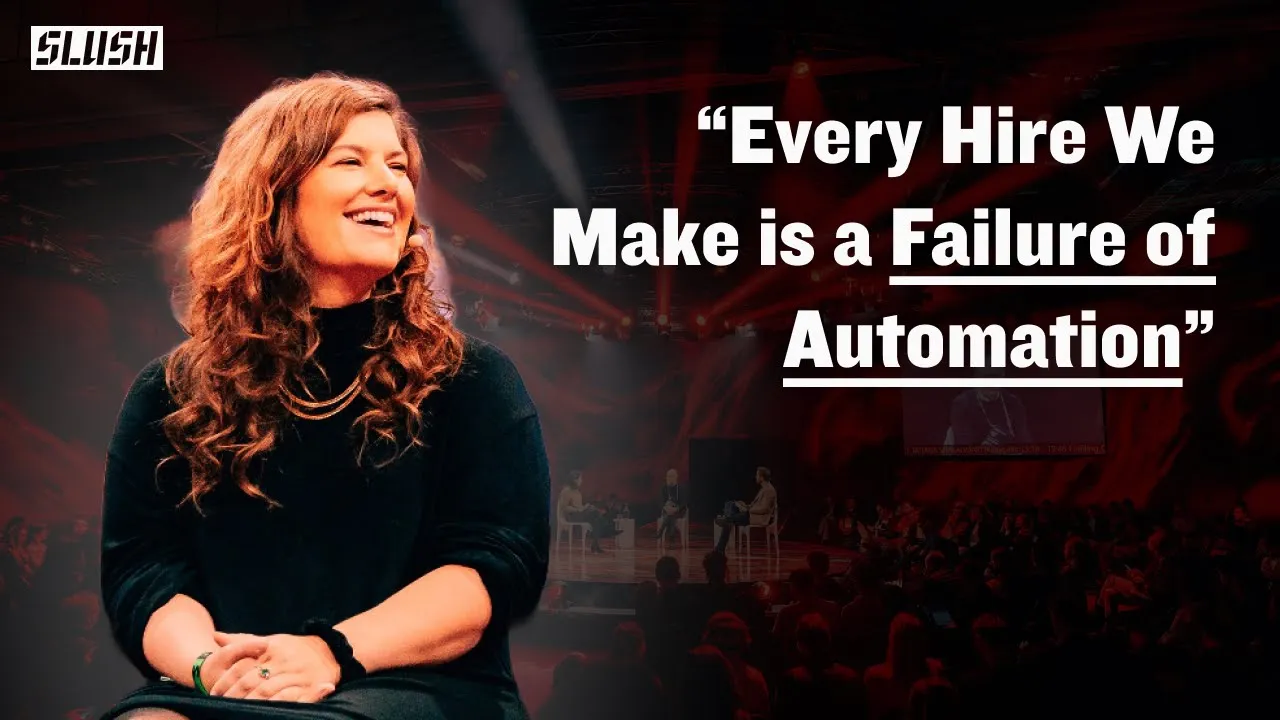


Brooke Nayden: CHRO @Adyen, Recruiting Top Talent, Structuring Hiring Processes | Slush 2024
Adyen's CHRO on building hiring processes that scale and competing for talent without burning out your recruiting team.
by
In the world of startups and scale-ups, the playbook for hiring is constantly being rewritten. We recently tuned into a fascinating session from Slush 2024 featuring Brooke Nayden, Chief Human Resources Officer at the fintech giant Adyen, and Mikko Mäntylä, Co-founder & CEO of Realm.
While the internet is currently abuzz with Brian Chesky’s concept of "Founder Mode"—the idea that founders should reject traditional middle-management dogmas and stay deeply involved in the details—Brooke and Mikko provided a pragmatic, boots-on-the-ground look at what that actually means for hiring and leadership.
Here is our editorial take on the conversation and what HR Tech professionals and founders can learn about building stellar teams.
One of the hardest hurdles for early-stage startups is convincing top-tier talent to join a company with zero customers and an unproven product. Mikko asked the million-dollar question: How do you convince great talent to join against all odds?
Brooke’s advice was counter-intuitive to the standard "glossy brochure" approach. When she joined Adyen in 2017, they weren’t the household name they are today. Her strategy? Sell the trajectory, not the current state.
"You’re in the sales pitch. You’re saying not what we are today, but where we are going." — Brooke Nayden
The HR Tech Takeaway:
Your employer branding strategy shouldn't just be about cool office perks or current headcount. It needs to be a narrative about the gap between where you are and where you are going. Candidates who are frightened by that gap aren't your hires; the ones excited by the challenge of bridging it are.
Hiring mistakes haunt every founder. Mikko admitted he struggles to find a correlation between his vetting process and his best hires. Brooke’s "industry secret"? Nobody has figured this out perfectly.
However, she championed one specific tool: The Case Study.
Many companies use technical tests to gatekeep talent. Brooke argues that case studies should be used to provide a realistic preview of the work. It serves two functions:
Assessment: Can they do the job?
Self-Selection: Do they want to do this specific type of work?
If a candidate hates the case study, they will hate the job. A robust case study reduces early-stage churn by acting as a simulation of the actual role.
In an era of complex HRIS workflows and week-long orientation seminars, Adyen takes a refreshingly different approach. Brooke recalled her first day: she had barely unboxed her laptop before being asked to jump into an interview.
Her philosophy is simple: Time-to-impact matters. The longer a new hire feels "new," the less ownership they take.
The HR Tech Takeaway:
Review your onboarding software and processes. are they designed to integrate the employee into the work or just into the system? If your tech stack is creating administrative friction rather than enabling immediate contribution, it might be time to streamline.
The conversation inevitably touched on the "Founder Mode" discourse—essentially, the rejection of hands-off management. Brooke offered a powerful perspective on leadership that challenges the traditional "people manager" archetype.
She argues that leaders without content knowledge are uninspiring.
"I would never work for a leader that I couldn't have an interesting content-based discussion about... If it’s just your 1:1 and asking 'What have you delivered with your OKRs?', that’s not an inspirational way of working."
At Adyen, the leadership stays involved. They interview every single hire, even at 4,000+ employees. Critics call this unscalable; Brooke calls it quality control. If you outsource the building of your team entirely, you lose the culture.
Perhaps the most difficult topic discussed was firing. Mikko shared that his biggest regrets were not letting underperformers go sooner.
Brooke reframed the narrative around firing from "cruelty" to "kindness." Dragging out a mismatch is toxic for the team, but it is also unfair to the individual. Keeping someone in a role where they are failing, receiving constant negative feedback, and not gaining traction is not "nice"—it’s paralyzing.
The Lesson:
A truly human-centric HR approach involves having the tough conversations early so that the individual can find a role where they can actually succeed.
Whether you are a Series A founder or an HR leader at an enterprise, the takeaways from this session are clear: Don't compromise on culture for a senior hire, keep your leaders deep in the content, and never stop selling the vision of where you are going.
We highly recommend watching the full session to catch all the nuances of their chat.
This article was inspired by the "Top Tips For Building A Super Team" session at Slush 2024.